
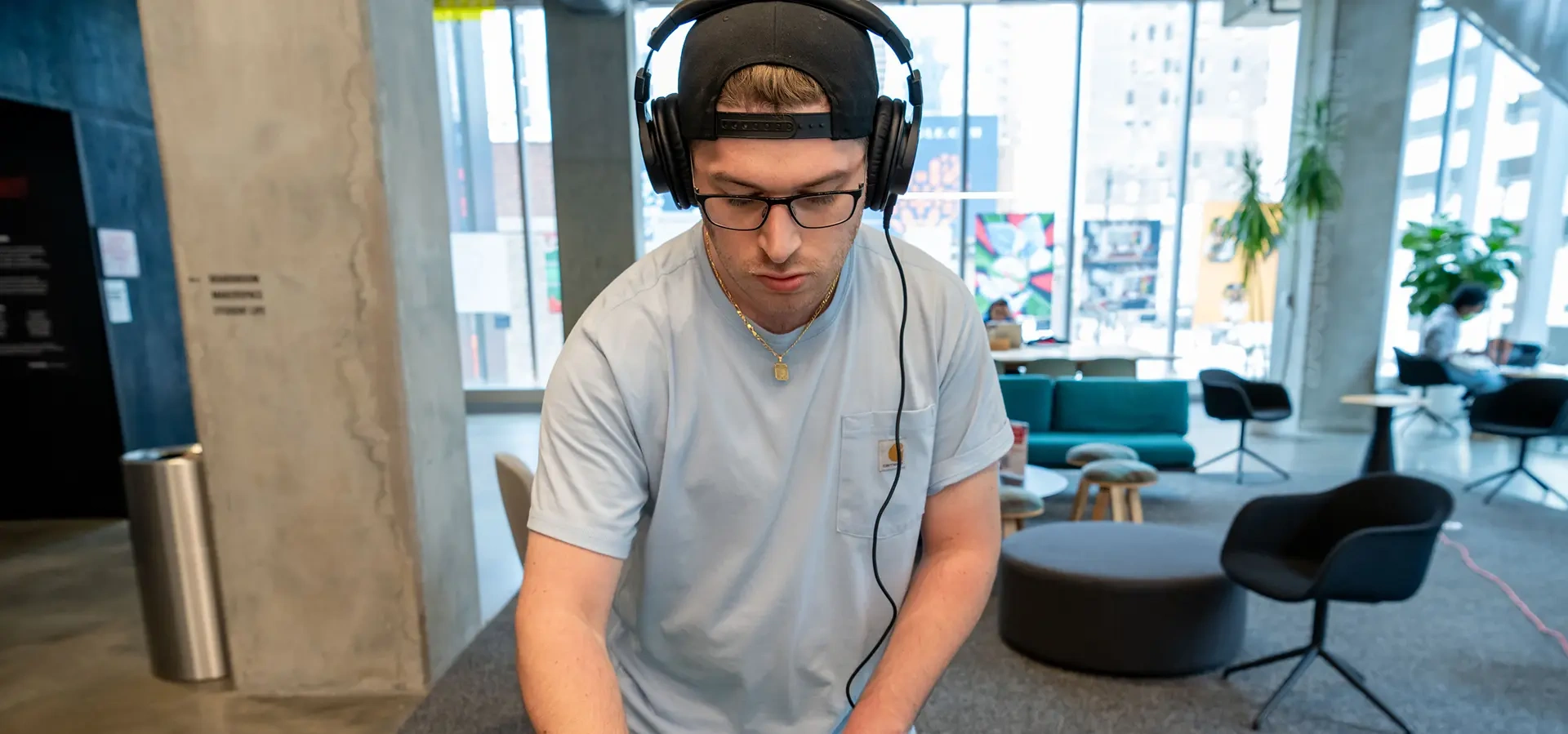
Audio Arts Careers Start at Columbia
Discover an Audio Major That Blends Artistry and Technology
Earning an audio degree from Columbia College Chicago means learning how to shape sound from every angle. As an Audio major, you’ll explore the science behind sound and the art of producing it, working with the same gear and software used in professional studios.
You can tailor your audio production path with five distinct concentrations:
- Audio and Sound Design
- Audiovisual Systems Integration
- Live Sound Reinforcement
- Music Recording
- General Audio Arts
Plus, when you go to school for audio production at Columbia College Chicago, you’ll have access to cutting-edge studios, live sound spaces, and a community of musicians, filmmakers, and designers who are just as passionate as you are. By the time you graduate, you’ll have real-world experience, a professional network, and a portfolio that gets noticed. Get a better sense of what your future in sound engineering could look like, and connect with Columbia today.
Learn More About Columbia College Chicago
Let us know the best way to reach you by filling out the form below and we'll send important information about applying to Columbia straight to your inbox!
Gain a Competitive Edge in Creative Arts at Columbia

Why Should I Go to College for Audio Arts in Chicago?
At Columbia, your campus extends into one of the most dynamic music cities in the country. Our South Loop location puts you minutes from legendary clubs, iconic performance venues, neighborhood listening rooms, and outdoor festivals where new sounds are always emerging. Chicago gives you countless chances to hear live music, meet local artists, and see how creative communities shape the city.
As a full-time student, you’ll have a Ventra U-Pass for unlimited access to the transit system, making it easy to catch a set across town or discover a new favorite venue. Whether you’re checking out a show with friends or exploring the city’s diverse musical neighborhoods, Chicago becomes part of your everyday rhythm.
A High-Level Look at Audio Production at Columbia
Earn Your BA in Audio Arts
Work in State-of-the-Art Sound Facilities
Including recording studios, live sound spaces, and audio editing suites
Complete a Capstone Project in Your Senior Year
Creative Careers Start at Columbia
Columbia grads launch creative careers across industries — from design and media to performance, business, and tech. Ninety-six percent of recent graduates report being employed or achieving success in creative practice, and you'll graduate career ready and connected too.
Columbia audio arts degree grads are prepared for a wide range of creative careers, including audio production assistant, audiobook recording engineer, live sound engineer, podcast recording engineer, radio and TV broadcast engineer.
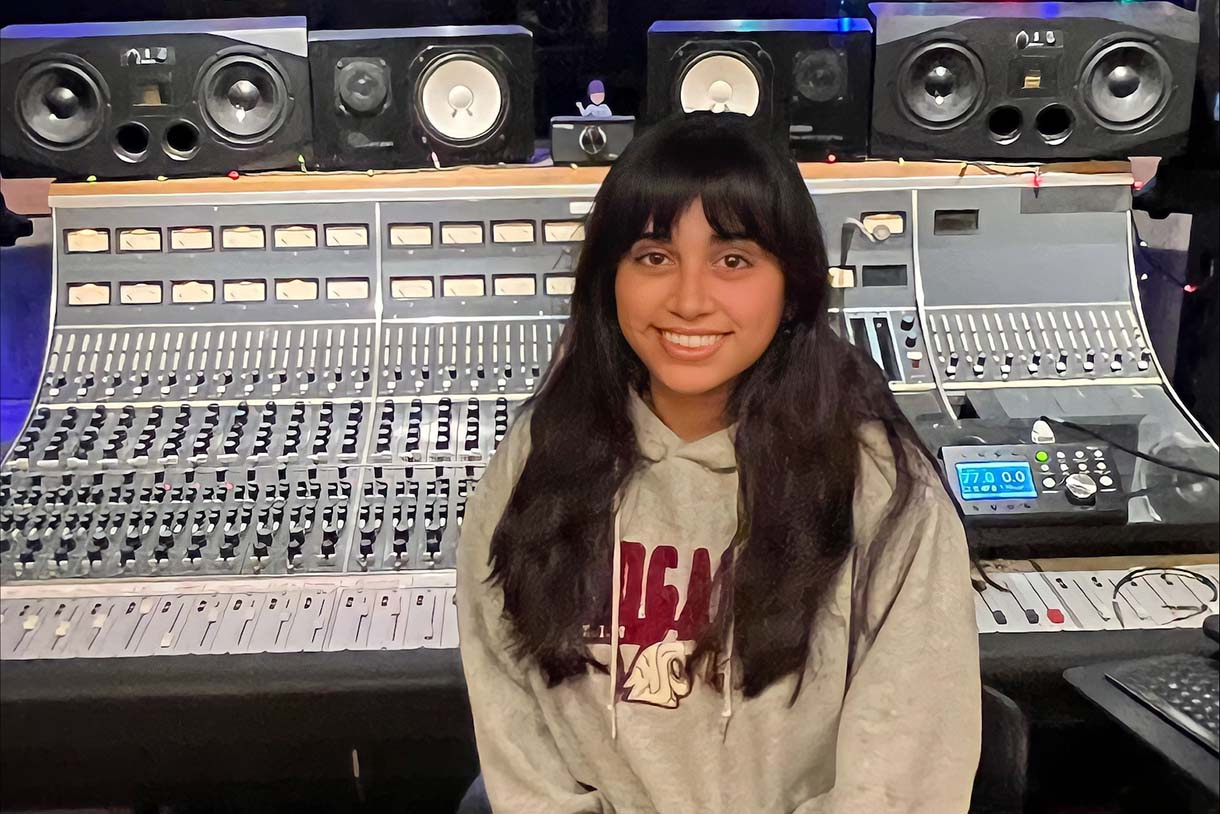
"I met so many cool people … I'm going remember SiLA forever. I’m so excited for where my future will take me."
— Raina Villareal ’23, Audio Arts
Columbia Makes Art School in Chicago More Affordable
A Columbia degree is an investment in your creativity—and we're committed to making it accessible. With 99 percent of first-year students receiving financial aid, you'll find the support you need to focus on what matters most: creating.
Ways Columbia helps you save:
- Merit-Based Scholarships: You're automatically considered for these when you apply to Columbia.
- Talent-Based Scholarships: You can choose to apply by submitting a portfolio or completing an audition.
- Visit and FAFSA Awards: Up to $8,000 over four years for visiting campus, plus $1,000 just for filing the FAFSA.
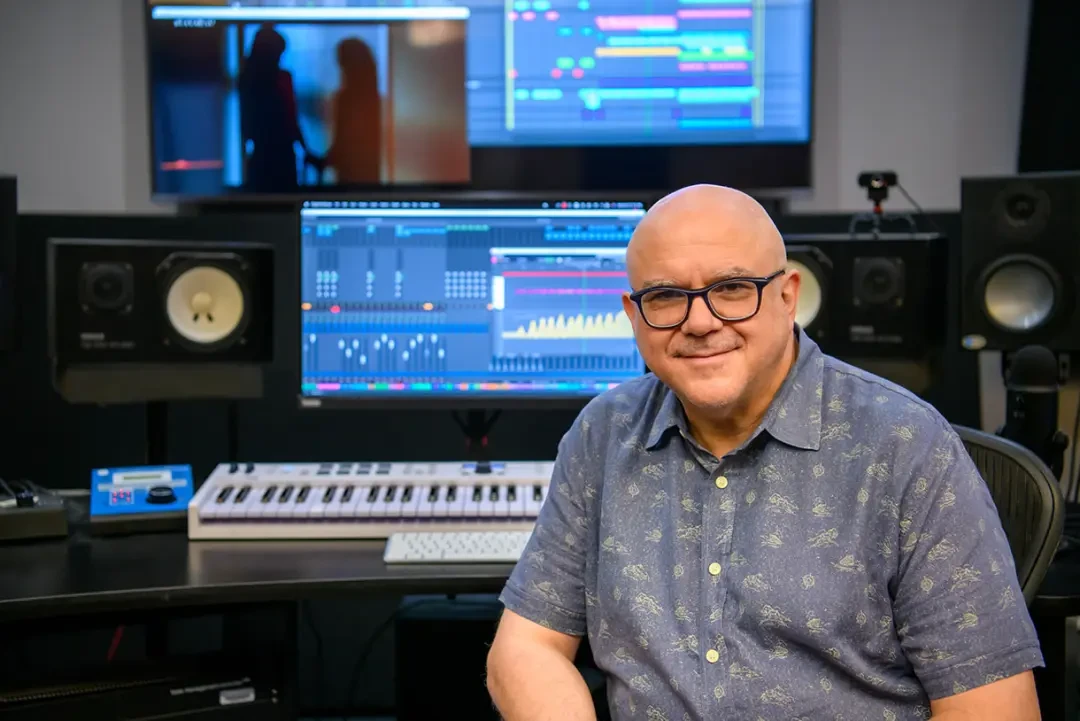
Faculty Spotlight: Kubilay Uner
Kubilay Uner is a composer for visual media who makes adventurous, eclectic, colorful music for media ranging from film and television to concerts and records. As an Associate Professor and Director of the Music Composition for the Screen MFA program, he guides students in shaping bold, original scores inspired by his own work on films like “American Traitor: The Trial of Axis Sally,” starring Al Pacino, and the cutting-edge climate documentary “The Here Now Project.”